
The Myrth Journal
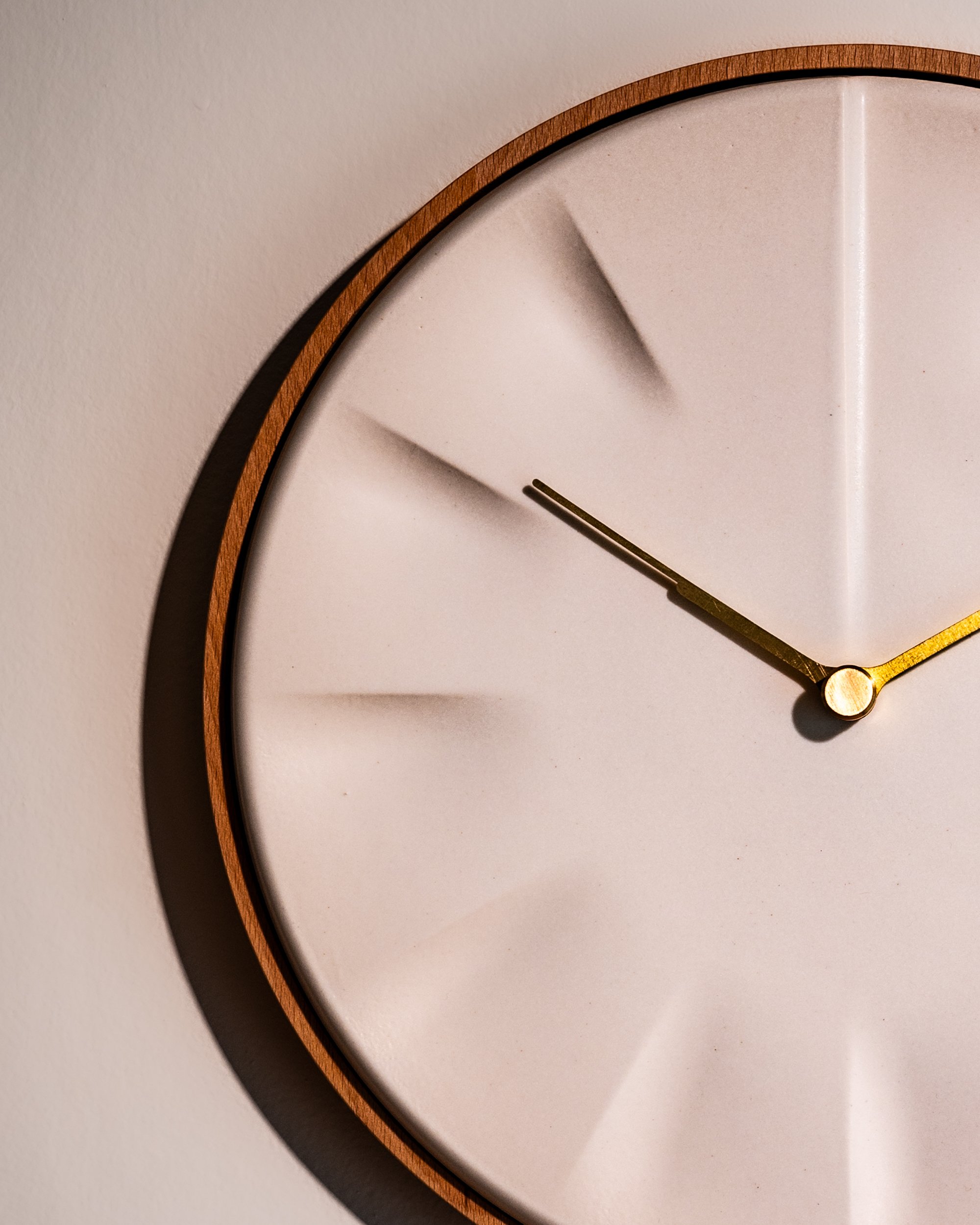
Light Tells Time: Designing the Wall Clock
From a blade of grass on a beach to a porcelain face that marks the hours in light and shadow, this is how we designed the Wall Clock.
This is a separate line rather than a copy of the opening paragraph. Canon allows either matching the opening word for word or cutting it short on purpose. A separate line can't drift out of sync with the opening when you edit, and the beach paragraph is too long to work as an index teaser.

Brandywine: The Color Between Burgundy and Mauve
We set out after burgundy and mauve and got neither one. Brandywine turned up between them, on a single tile we set aside for a year, and we did not come back to it until we needed a color for chefs. The story behind our latest Studio Edition glaze.

How to Build a Dinnerware Set: Where We'd Start You
Which pieces, which set, how many settings, and what color. Four decisions at once, which is why people stall. Here is the order we walk people through in the studio.

Built for Service: Made by Designers, Trusted by Chefs
Two product designers, one studio, and every step of production under one roof. We design our glazes from scratch and make our own molds, and this is why that matters to a chef.

The Durability Project: Living With Myrth
Our kitchen is the longest-running durability test we have. Years of daily use, real accidents, and not a single chip. Here's what living with Myrth porcelain actually looks like.

Char and Chartreuse: Summer Grilling on Ume Porcelain
Pale chartreuse does something unexpected on a table: it makes food look more alive. We've been plating on Ume since the glaze launched in mid-May and keep stopping to take photos we didn't plan to take.

Introducing Ume: Our First Studio Glaze.
There is a specific color that only exists for a few weeks a year. Too yellow to be green, too green to be yellow. We've been chasing it since we started making tableware. This is how we finally got there, and why we named it after a Japanese plum.

Myrth x Hai Hospitality: How a Trade Show Conversation Became a National Partnership
We met the Hai Hospitality team at the Utility Trade Show in Chicago in 2024. They picked up our pieces and connected with them immediately. Since that conversation, we've made restaurant tableware for three Hai concepts across three cities. Here's the full story.

The Durability Project: The Ring Test — Why Porcelain Lasts Longer
Tap a porcelain plate with a spoon and it rings like a bell. That sound tells you everything about particle alignment, vitrification, and why porcelain is fundamentally stronger than stoneware. Here's the material science, simplified.

Understanding Our Glazes
Every glaze in our collection has surface qualities that product photography can't capture — texture, depth, how it catches light at different angles, and a soft, buttery hand feel. Here's what you're missing when you shop online.

The Durability Project: Care, Use & The Truth About Silverware Marks
Are your Myrth pieces dishwasher safe? Oven safe? What's actually causing those grey marks on your plates — and how do you get rid of them? In this installment of The Durability Project, we answer every practical care question we get, plus a little materials science explaining why porcelain and silverware behave the way they do together.

The Durability Project: What Makes Dinnerware Safe and Chip-Resistant
We get a version of the same question almost every week: Is your dinnerware safe? Will it chip? What's actually in the glaze?
Fair questions. Most brands don't say much about what goes into their products, usually because the answer is complicated, and complicated doesn't sell. A lifestyle photo does.
We can answer with specifics. We formulate our own clay and glazes from scratch in our Providence, Rhode Island studio, which means we know exactly what is in them and exactly how they behave.
Here's what to know before buying dinnerware you plan to eat off every day.